Indie game development has always been about maximizing creativity with limited resources. Today, artificial intelligence tools are revolutionizing what small teams can accomplish, enabling indie developers to create experiences that rival AAA productions. Let’s explore practical applications of AI in indie game development through real-world examples and success stories.
Asset Creation: Doing More with Less
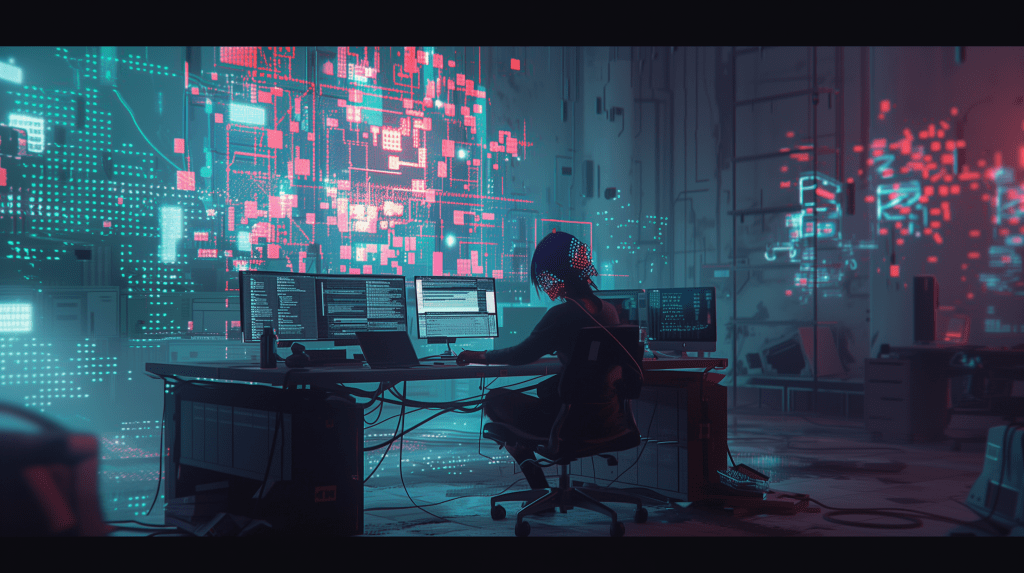
One of the most resource-intensive aspects of game development is creating visual assets. AI image generation tools have become game-changers for indie developers:
Character Design: Many indie studios now use Midjourney to generate concept art and character designs. This approach lets developers rapidly iterate through visual ideas before committing to final designs. The team behind “Hollow Echo” generated over 200 character concepts using Midjourney, saving months of pre-production time.
Environment Creation: RunwayML has been particularly effective for environment textures and backgrounds. The developers of “Sylvan Whispers” used RunwayML to create their enchanted forest environments, allowing their two-person team to build a visually stunning world that would have required a much larger art team using traditional methods.
Animation Assistance: AI tools like Runway’s Gen-2 can help create animation reference or even in-game cutscenes. This technology allowed solo developer Maria Chen to include fully animated story sequences in her narrative adventure game “Timekeeper.”
Procedural Content Generation
AI excels at creating variations within established parameters, making it perfect for procedural content:
Level Design: The roguelike “Descent Protocol” uses machine learning algorithms to generate challenging but fair level layouts based on player skill data, creating a personalized difficulty curve.
Dynamic Narratives: Text generation AI can create variations in NPC dialogue or quest descriptions. The RPG “Chronicles of the Forgotten” uses AI to generate thousands of unique side quests that feel hand-crafted.
Enemy Behavior: Machine learning can create more adaptive and interesting enemy behaviors. In “Neon Hunters,” enemies learn from player tactics and develop countermeasures, creating an ever-evolving challenge.
Audio Production
Sound design and music composition have become more accessible to indie developers through AI:
Adaptive Soundtracks: AI music generation tools have enabled indie games like “Resonance Path” to feature dynamic soundtracks that respond to gameplay moments without requiring a full audio team.
Voice Acting: Text-to-speech technologies have advanced significantly, allowing indie developers to include voiced characters without the budget for professional voice actors. “Whispers in the Dark” uses AI-generated voices for its supporting cast, reserving their budget for professional voice actors for main characters.
Success Stories: Small Teams Creating Big Experiences
Case Study 1: Solar Drift
A three-person team created “Solar Drift,” a space exploration game with over 100 unique planets. By using AI for procedural planet generation and alien species creation, they built a universe that feels handcrafted despite its algorithmic origins. The game has sold over 300,000 copies since its release.
Case Study 2: Mythic Realms
Solo developer James Chen used AI tools extensively in creating his fantasy RPG “Mythic Realms.” By leveraging Midjourney for concept art and environmental design, and RunwayML for animation references, he created a 15-hour adventure game in 18 months that received critical acclaim for its visual style and storytelling.
Case Study 3: Echo Chamber
The puzzle game “Echo Chamber” uses AI to analyze player behavior and dynamically adjust puzzle difficulty. This personalized experience has led to exceptionally high completion rates compared to other puzzle games, as players rarely hit frustration walls that cause them to abandon the game.
Practical Implementation Tips
For indie developers looking to incorporate AI into their workflow:
- Start with asset generation to reduce production bottlenecks
- Use AI for brainstorming and concept development rather than final assets
- Implement simple AI behaviors before attempting more complex systems
- Consider using AI to handle repetitive tasks (like creating variations of similar assets)
- Combine AI-generated content with human curation for best results
Learning Resources
For developers interested in diving deeper into AI for game development, AI Filmmaker Studio (https://www.ai-filmmaker.studio) offers specialized guidance and research on incorporating AI tools into creative workflows. Their tutorials on combining Midjourney and RunwayML are particularly valuable for indie game developers looking to maximize visual impact with minimal resources.
Conclusion
AI isn’t replacing creativity in indie game development—it’s amplifying it. By handling time-consuming technical tasks and expanding what small teams can accomplish, AI tools are democratizing game development and enabling indies to compete with larger studios on storytelling, visuals, and gameplay innovation.
As these technologies continue to evolve, we can expect to see even more impressive achievements from indie developers who leverage AI as a creative partner in their development process. The most successful developers will be those who find the right balance between AI assistance and human creativity, using these tools to express their unique vision rather than replace it.
Discover more from AI Film Studio
Subscribe to get the latest posts sent to your email.
