The intersection of artificial intelligence and filmmaking has sparked a revolution in visual storytelling, giving birth to what many now call “AI film art.” This emerging medium combines traditional cinematography with generative AI technologies to create visual narratives that would be impractical, impossible, or prohibitively expensive using conventional methods. Let’s explore how filmmakers are using tools like Midjourney and Runway ML to transform their artistic visions into reality.
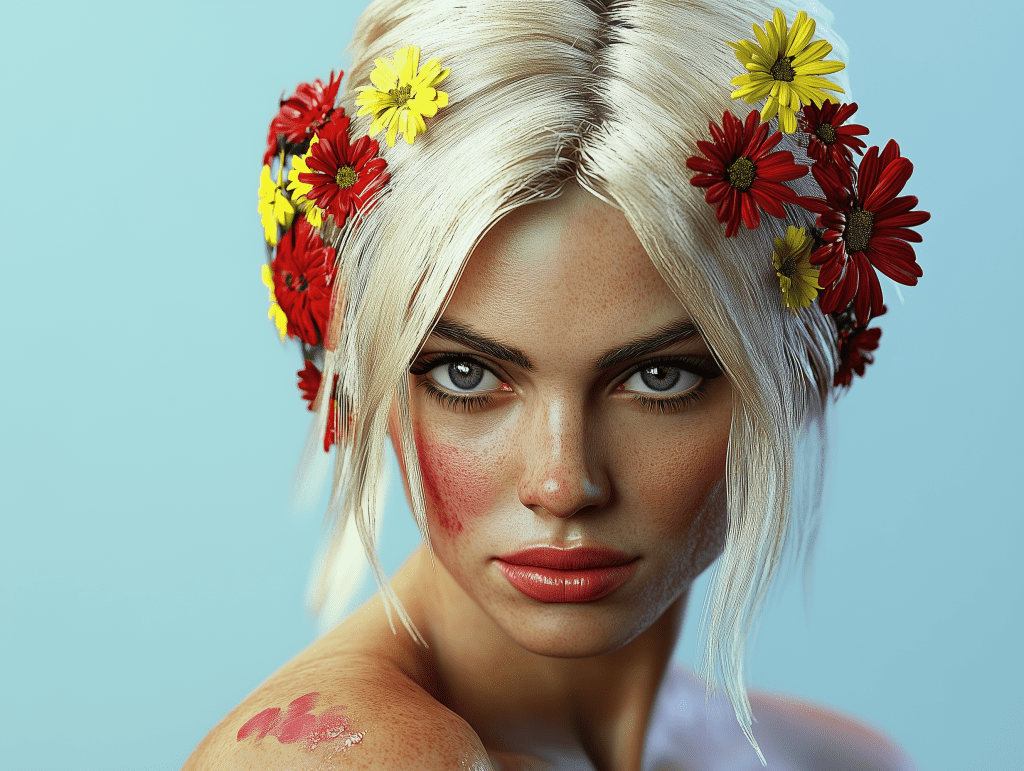
Defining AI Film Art
AI film art represents more than just applying filters or effects to existing footage. It encompasses a fundamentally different approach to creating visual content, where generative models become active collaborators in the creative process. This collaboration can take many forms:
- Creating impossible landscapes and environments
- Generating visual elements that transition and morph in ways physical objects cannot
- Producing stylized visuals that maintain consistent aesthetics across entire productions
- Enabling small teams to create visually rich content previously requiring massive production resources
Practical Applications in Contemporary Filmmaking
Conceptual Development and Pre-visualization
Many filmmakers now begin their creative process by using AI to explore visual concepts and develop the aesthetic language of their projects.
Director Sophia Chen describes her process: “Before writing a single page of script, I generate dozens of key images in Midjourney to explore the visual tone of my story. Once I find the right aesthetic direction, I can then build my narrative around these visual anchors rather than trying to force my vision into production constraints later.”
Experimental Narrative Techniques
AI film art has enabled a new wave of experimental narratives that transcend traditional visual language.
Filmmaker Jordan Martinez created “Liminal Spaces,” a short film exploring dreams and memory, by using Midjourney to generate base imagery and Runway ML to animate transitions between scenes. “The fluidity of transformation that AI enables perfectly expresses how memories blur and blend in our minds,” Martinez explains. “I couldn’t have achieved this organic sense of transformation with traditional effects.”
Extending Limited Resources
Independent filmmakers have embraced AI film art as a way to realize ambitious visions despite budget constraints.
For her science fiction short “Beyond the Void,” director Amy Wong created elaborate space scenes by combining minimal practical sets with AI-generated environments. “We shot actors against simple backdrops, then used Runway’s motion tracking to integrate them into vast cosmic landscapes generated in Midjourney. What would have required millions in VFX budget cost us virtually nothing.”
Success Stories in AI Film Art
Festival Circuit: “Synthetic Memories”
Director Liam Park’s “Synthetic Memories” became the first fully AI-assisted film to win a major award at the Sundance Film Festival. Park used a combination of Midjourney for world-building and Runway ML for animation and editing to create a surrealist exploration of artificial consciousness.
“The judges didn’t initially realize the film was created using AI,” Park recalls. “They were responding to the emotional impact of the story, which was exactly my goal—to use these new tools in service of human expression, not as a novelty.”
Music Video: “Dreamscape Collective”
Music video director Elena Garcia revolutionized her workflow by integrating AI film art techniques for indie band The Nebula Project. Her video “Cosmic Rhythm” features performers seamlessly integrated into evolving AI-generated environments that respond to the music.
“We designed a system where the AI environments would react to specific frequency patterns in the music,” Garcia explains. “The result was a visual experience that felt organically connected to the audio in a way traditional music videos struggle to achieve.”
Feature Film Elements: “The In-Between”
While completely AI-generated feature films remain rare, director Robert Chen incorporated significant AI film art elements into his indie feature “The In-Between.” For dream sequences and metaphysical transitions, Chen used Midjourney and Runway ML to create visuals that conventional production methods couldn’t achieve.
“The critics specifically mentioned how those sequences elevated the emotional impact of the story,” Chen notes. “AI allowed us to visualize the protagonist’s internal experience in a way that felt authentic rather than gimmicky.”
Technical Approaches and Workflows
The Midjourney-to-Runway Pipeline
One of the most effective workflows combines the image generation strengths of Midjourney with the animation and editing capabilities of Runway ML:
- Develop conceptual imagery and key visual moments in Midjourney
- Create variations and iterations to build a visual library
- Import these assets into Runway ML
- Animate still images using Runway’s image-to-video features
- Apply motion tracking to integrate live elements
- Edit and compose the final sequences within Runway
This pipeline allows filmmakers to move from pure imagination to finished sequences without requiring extensive technical skills or specialized software.
Style-Consistent Worldbuilding
AI film artist Maya Wilson has pioneered techniques for maintaining visual consistency across AI-generated sequences:
“The key is creating a detailed visual prompt library that captures the specific aesthetic of your project. I develop a set of core prompts, then systematically test variations to build a comprehensive visual language before generating any production assets.”
This methodical approach ensures that AI-generated elements maintain a cohesive look throughout a production, rather than appearing as disconnected visual experiments.
Learning Resources for AI Film Art
For filmmakers looking to develop AI film art skills, AI Filmmaker Studio (https://www.ai-filmmaker.studio) offers specialized courses and research on integrating these tools into professional workflows. Their curriculum focuses on the artistic application of AI rather than just technical operation, helping filmmakers develop a thoughtful approach to this new medium.
Their “AI Visual Storytelling” course specifically addresses how to maintain narrative coherence while leveraging the unique capabilities of generative models, and their hands-on workshops guide participants through complete Midjourney-to-Runway pipelines.
Ethical Considerations in AI Film Art
As with any emerging medium, AI film art raises important ethical questions about authorship, originality, and the future of visual creation. Responsible practitioners are actively engaging with these questions rather than avoiding them.
Filmmaker and AI ethicist Thomas Zhang suggests: “We need to approach AI film art with both enthusiasm and critical awareness. These tools don’t replace human creativity—they extend it in new directions. The most interesting work acknowledges this relationship rather than concealing it.”
The Future of AI Film Art
As generative technologies continue to evolve, we can anticipate several developments in AI film art:
- Longer form content with greater narrative coherence
- More sophisticated integration of generated and practical elements
- Emergence of distinctive AI film art aesthetics and genres
- Democratization of high-concept visual storytelling
The most exciting aspect of this evolution is how it might expand the vocabulary of visual storytelling, allowing filmmakers to express ideas and emotions that were previously beyond the capabilities of the medium.
Conclusion
AI film art represents not just a new production technique but potentially a new form of visual expression. By combining the imaginative capabilities of generative AI with the narrative traditions of filmmaking, creators are exploring uncharted territory in visual storytelling.
For filmmakers willing to embrace these tools thoughtfully, the possibilities extend far beyond cost savings or visual novelty—they offer new ways to express the full range of human experience through moving images. As the technology continues to evolve and creators develop more sophisticated approaches to using it, AI film art may well become one of the most significant developments in visual storytelling since the advent of digital cinematography.
Discover more from AI Film Studio
Subscribe to get the latest posts sent to your email.
