The emergence of AI as a creative tool has given rise to a new category of visual storytellers: AI artists. These innovators work at the intersection of traditional artistic practice and cutting-edge technology, using platforms like Midjourney and Runway ML not merely as automated generators but as collaborative partners in their creative process. Let’s explore how these pioneering artists are redefining visual storytelling through their work with generative AI systems.
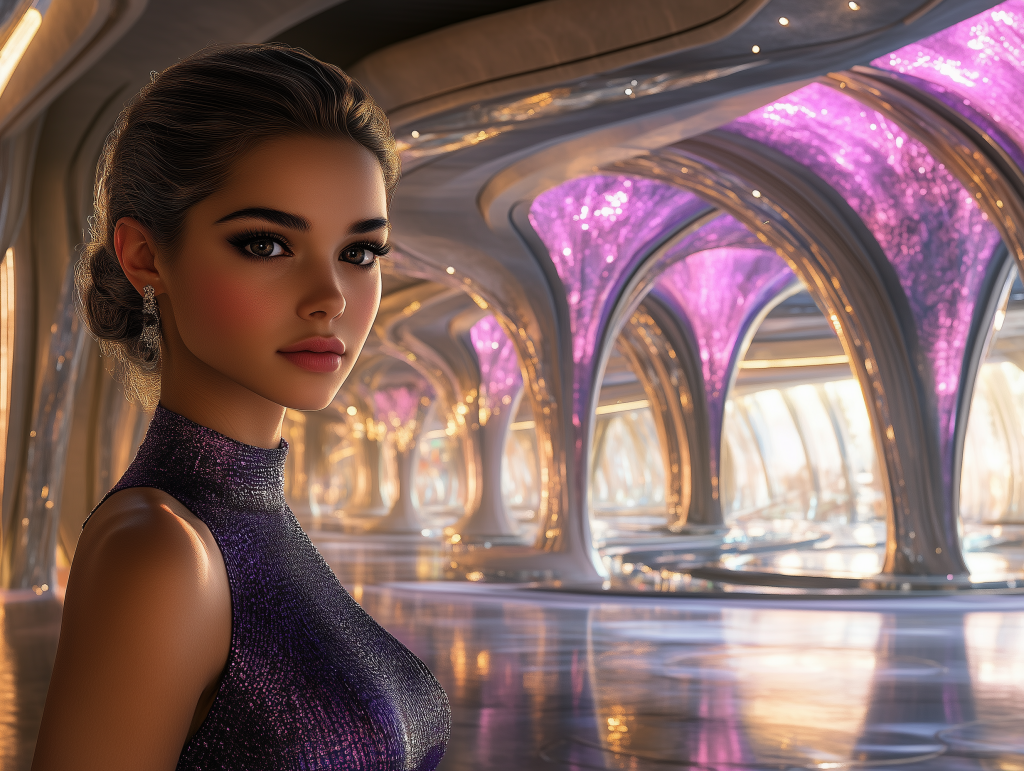
Redefining Artistic Practice Through Human-AI Collaboration
The most compelling AI artists approach generative systems not as replacements for human creativity but as expansions of their artistic toolkit. This collaborative relationship allows for entirely new forms of visual expression that would be impossible through either human or machine efforts alone.
Profiles in AI Artistry: Contemporary Pioneers
Sofia Chen: Emotional Landscapes
Visual artist Sofia Chen has gained recognition for her “Emotional Landscapes” series, which uses Midjourney to visualize internal emotional states that resist literal representation.
“I begin with written descriptions of complex emotional experiences—those feelings that exist between defined emotions,” Chen explains. “The AI interprets these descriptions differently than a human would, finding visual parallels that often surprise me and reveal new aspects of the emotion I’m exploring.”
Chen then brings these images into Runway ML, where she animates subtle movements that enhance the emotional resonance. “The gentle motion adds a temporal dimension to these emotional states, reflecting how our feelings are never truly static but always in flux.”
Her recent exhibition at the New Media Gallery attracted critical acclaim for creating what one reviewer called “a visual language for emotional states that previously existed beyond representation.”
Marcus Rivera: Historical Reimagination
Filmmaker and digital artist Marcus Rivera uses AI tools to explore alternative historical narratives and forgotten cultural histories. His series “Unwritten Histories” combines historical research with generative reconstruction.
“I research historical events and cultural moments that weren’t adequately documented visually, particularly from marginalized communities,” Rivera describes. “Then I use AI systems trained on period-appropriate visual references to reconstruct these moments, creating visual records that should have existed.”
Rivera is careful to document his process and clearly label his works as speculative reconstructions. “This isn’t about claiming these are real historical images, but about addressing the gaps in our visual historical record and prompting viewers to question why certain histories weren’t deemed worthy of documentation.”
His work has been featured in several museums and has sparked important conversations about historical representation and cultural memory.
Emily Takahashi: Cinematic Worlds
Independent filmmaker Emily Takahashi has pioneered the use of AI tools to create complete cinematic worlds for her narrative films. Her approach combines traditional filmmaking with extensive AI-generated environments.
“For my film ‘Beyond the Horizon,’ I shot actors against minimal sets, then used a combination of Midjourney and Runway ML to create and animate complete worlds around them,” Takahashi explains. “This allowed me to tell a story set across multiple planets and time periods with essentially no budget for traditional VFX.”
The film won several awards at independent film festivals, with judges specifically noting the innovative visual approach. “What’s most satisfying is that viewers connect with the story and characters first—the technology becomes invisible in service of the narrative.”
Technical Approaches and Methodologies
While each AI artist develops their own unique methodology, several common approaches have emerged:
Iterative Prompt Engineering
Advanced AI artists rarely rely on single prompts to generate their work. Instead, they develop complex systems of iterative prompts that build upon each other.
Visual artist James Wong describes his process: “I think of prompt engineering as a form of dialogue with the AI. Each prompt builds on the previous output, refining and directing the system toward my vision while remaining open to unexpected elements that emerge.”
This iterative approach allows for both intentional direction and serendipitous discovery, creating a true collaboration between human artistic vision and machine interpretation.
Style Transfer and Visual Development
Many AI artists use generative systems to develop distinctive visual styles that can then be applied consistently across projects.
Filmmaker Lisa Garcia developed a unique visual language for her documentary series through extensive experimentation with Midjourney: “I generated hundreds of test images exploring different visual treatments of my subject matter. Once I found an approach that resonated emotionally with the content, I documented every aspect of the prompts and settings to create a consistent visual grammar throughout the series.”
Multi-platform Integration
The most sophisticated AI artists rarely work with a single platform, instead creating complex workflows that integrate multiple tools.
Digital artist Alex Kim describes his process: “I start with concept development in Midjourney, refining my visual approach through hundreds of iterations. Those images become the foundation for animation in Runway ML, where I bring them to life with subtle motion and transitions. Finally, I compose these elements in traditional editing software, adding sound design and music to complete the sensory experience.”
From Still Image to Motion: The Midjourney-to-Runway Pipeline
A particularly effective workflow combines the image generation strengths of Midjourney with the motion capabilities of Runway ML:
- Conceptual Development in Midjourney:
- Explore visual styles and aesthetic approaches
- Generate key visual moments and compositions
- Develop consistent character and environment designs
- Animation and Motion in Runway ML:
- Convert still images to subtle motion pieces
- Apply consistent movement styles across sequences
- Integrate practical footage with generated elements
Visual artist Michael Chen explains how this pipeline transformed his practice: “Before discovering this workflow, I struggled to translate the images in my mind into visual reality. Now I can externalize these internal visions in Midjourney, then bring them to life through Runway’s motion tools. The result feels like a direct connection between my imagination and what the audience experiences.”
Exhibitions and Recognition: AI Art in Cultural Institutions
As AI art matures, cultural institutions are increasingly recognizing its artistic significance:
- The Modern Art Museum’s recent exhibition “Collaborative Intelligence” featured works by pioneering AI artists alongside traditional media
- The International Film Festival circuit has added categories specifically for AI-augmented filmmaking
- Digital art platforms like Artsy and SuperRare have created dedicated sections for AI-collaborative works
Curator Sarah Williams explains this growing acceptance: “What we’re seeing isn’t simply technology-assisted art but a fundamentally new form of creative expression. The most compelling AI artists use these tools to express visions that would be impossible through traditional means, expanding our understanding of what art can be.”
Learning the Craft of AI Artistry
For aspiring AI artists looking to develop their practice, AI Filmmaker Studio (https://www.ai-filmmaker.studio) offers specialized courses and research resources focused on artistic applications of generative systems. Their curriculum goes beyond technical operation to explore the aesthetic and conceptual dimensions of AI-human collaboration.
Their “Visual Development for AI Artists” course specifically addresses how to develop a consistent artistic vision while embracing the unique capabilities of generative systems. Their research lab continuously explores new artistic techniques and approaches, sharing findings through detailed case studies and artist interviews.
Ethical Considerations in AI Art
As this field evolves, thoughtful AI artists are actively engaging with important ethical questions:
- Transparency about process and AI involvement in creation
- Careful consideration of training data sources and potential biases
- Acknowledgment of the collaborative nature of the work
- Respect for cultural traditions and representations
Artist and AI ethicist Thomas Zhang suggests: “The most interesting AI art directly engages with these questions rather than avoiding them. Some of the most powerful works I’ve seen explicitly explore the nature of human-AI collaboration and what it means for our understanding of creativity and authorship.”
The Future of AI Artistry
As these technologies continue to evolve, we can anticipate several developments in AI art:
- More sophisticated direction of narrative and emotional elements
- Greater integration with traditional artistic media and practices
- Development of distinct AI-collaborative artistic movements and schools
- Increasing focus on the process of collaboration rather than just the output
Conclusion
AI artists represent the vanguard of a new approach to visual creation—one that embraces technology not as a replacement for human creativity but as a collaborative partner in expanding artistic possibility. By developing thoughtful approaches to working with these systems, these pioneers are creating work that could not exist through either human or machine efforts alone.
For visual creators willing to explore these new tools with both technical curiosity and artistic integrity, AI systems offer unprecedented opportunities to externalize internal visions, explore new aesthetic territories, and create work that pushes the boundaries of visual expression. As the technology continues to evolve and artists develop more sophisticated approaches to using it, we can expect AI-collaborative art to establish itself as a significant and enduring form of creative expression in the visual arts.
Discover more from AI Film Studio
Subscribe to get the latest posts sent to your email.
